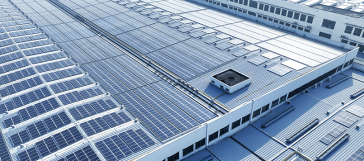
Recently, the rooftop distributed photovoltaic project for Guangdong Fuhua Engineering Equipment Manufacturing Co., Ltd., constructed by Midea New Energy, has officially been connected to the grid and put into operation. The project has an installed capacity of 13.85MWp, marking another large-scale commercial and industrial photovoltaic project delivered by Midea New Energy in the Greater Bay Area, providing a replicable model for equipment manufacturing companies to reduce costs and carbon emissions through green power.
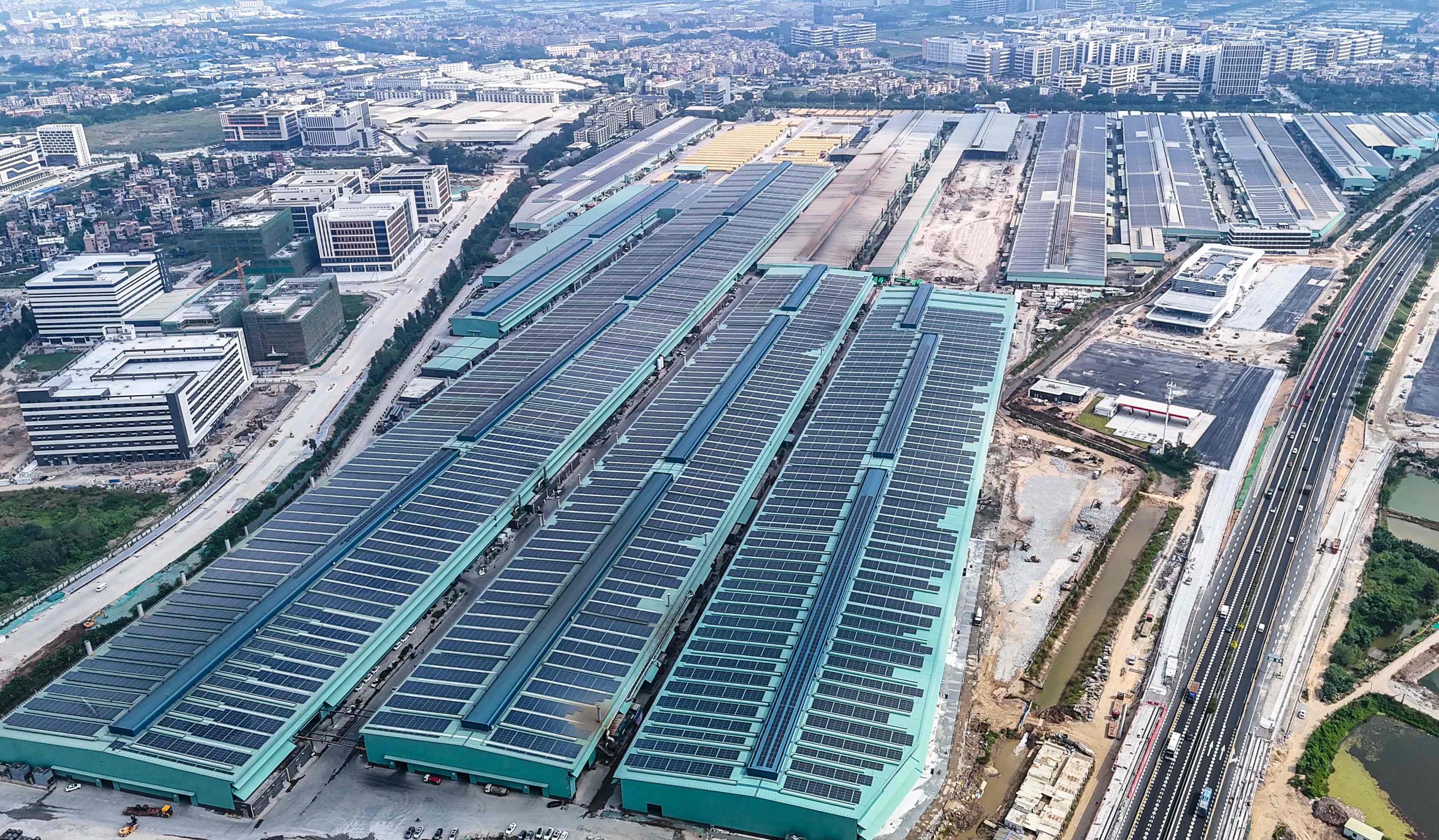
The project is located in Shunde District, Foshan City, Guangdong Province, utilizing the roofs of workshops No. 2, 3, and 4 at Fuhua's factory. The total roof area is approximately 157,000 square meters, with 21,979 630Wp modules installed, resulting in a total installed capacity of 13.85MWp. It operates on a 'self-generated, self-used, surplus power to the grid' model, with an annual average power generation of about 14.1 million kWh. A 10kV photovoltaic switch station, photovoltaic transformer, SVG reactive power compensation device, and photovoltaic secondary warehouse are being constructed synchronously within the factory, forming a complete system for voltage step-up, power transmission, and power quality management.
Guangdong Fuhua Engineering Equipment Manufacturing Co., Ltd. is jointly built by Guangdong Fuhua Machinery Group and Heshan City Government, located in the western Pearl River Economic Belt. It is the first large-scale construction machinery host factory in Guangdong Province, mainly producing a full range of high-end loaders, excavators, and components. Welding, spraying, air compression, and machining operations run around the clock in the park, with electricity costs accounting for a significant portion of manufacturing costs. The large roof area of the workshop, with concentrated power consumption below the roof, enables clean electricity to be produced and consumed on-site, replacing part of the city power, reducing peak period costs, and without the need for additional land use.
Over a 25-year operational cycle, the project is expected to generate a total of 352.5 million kWh, saving 43,000 tons of standard coal and reducing CO2 emissions by 220,500 tons, with an average annual reduction of carbon emissions of about 8,820 tons. For the enterprise, this is not only a continuous cost benefit but also a verifiable asset in the construction of green factories and the implementation of the 'dual carbon' goals.
The uniqueness of the project first lies in its scale: 13.85 MWp installed capacity, 157,000 square meters of roof area, and three workshop roofs rolled out simultaneously, requiring far higher precision in production scheduling, logistics, and on-site organization than conventional roof projects. The challenge lies in the window period: the construction period is less than five months, spanning the high-temperature, thunderstorm, and typhoon-prone seasons in Guangdong; The project team coordinated production, staggered construction, pre-stocked materials, and formulated special flood and wind prevention plans, meeting the grid connection conditions on schedule. An even greater challenge was the “no shutdown”: strict fire operation and high-altitude work control in the factory area, with dense logistics vehicles. The project implemented zoned isolation, fire operation approval, and daily safety briefings, with on-site supervision throughout the high-altitude and electrical work processes, enabling construction and production to proceed concurrently and minimizing disruptions to production and logistics, achieving zero safety incidents.
The connection of the Fuhua project to the grid not only brings significant green electricity benefits and carbon reduction effects to this engineering machinery company but also reaffirms Midea New Energy's capability to deliver large-scale commercial and industrial photovoltaic projects under complex working conditions and tight schedules. In response to the long-term demand for the green transformation of the manufacturing industry, Midea New Energy will continue to focus on distributed photovoltaics, converting the rooftop resources of more enterprises into sustainable energy power.

The official WeChat
official account of Hiconics

The official WeChat
account of Midea Photovoltaic